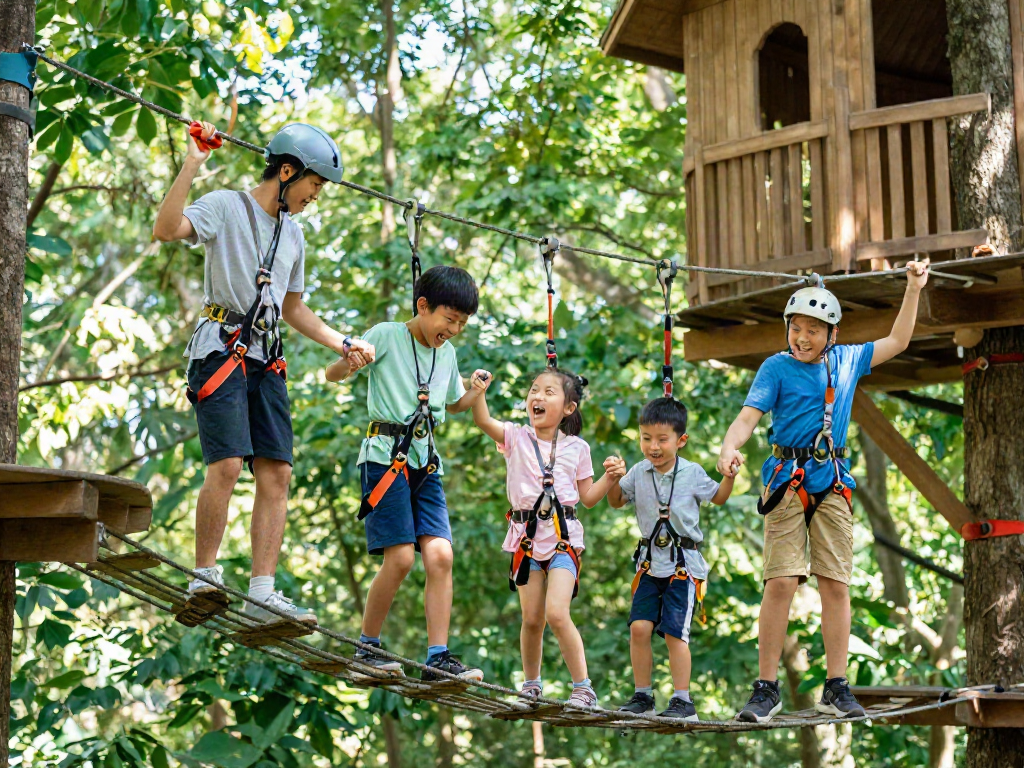
The Allure of Rope Bridges in Family Outdoor Activities
In the heart of nature, adventure awaits, and nothing encapsulates the spirit of excitement and exploration quite like a rope bridge. These sturdy, yet flexible structures provide a unique pathway between trees or across various landscapes, serving as both a thrilling challenge and a captivating focal point for outdoor family activities. As families increasingly seek ways to bond and engage with nature, the Rope Bridge emerges as an ideal solution for creating memorable experiences and building lasting connections.
Why Choose a Rope Bridge for Family Adventures?
Rope bridges offer a multifaceted experience for families looking to escape the confines of daily life. They are not just functional; they evoke a sense of adventure and creativity. When children and adults alike traverse a rope bridge, they partake in an experience that builds trust, teamwork, and physical agility. Such bridges can also stimulate imaginative play, often becoming a pirate ship, a mountain ridge, or whatever the mind conjures during an outdoor adventure.
- Promotes Physical Activity: Walking or climbing a rope bridge improves coordination and balance, making it an excellent physical activity for children and adults.
- Encourages Teamwork: Families can work together to build or navigate a rope bridge, fostering teamwork and communication.
- Enhances Imagination: Rope bridges can spark storytelling and imaginative play, providing endless opportunities for creative adventures.
Safety Features to Consider When Using a Rope Bridge
While rope bridges provide countless opportunities for enjoyment, safety should remain a priority. Several safety features should be considered before embarking on an adventure.
- Sturdy Construction: Ensure the bridge is constructed from high-quality, durable materials that can withstand weight and weather conditions.
- Guardrails: Incorporating guardrails can provide extra security, especially for younger children. This will prevent falls and enhance safety.
- Weight Limits: Always adhere to specified weight limits to prevent accidents and ensure the safety of all users.
Rope Bridge Designs for Different Age Groups
Not all rope bridges are created equal; their design can vary significantly depending on the age group they are intended for. Younger children may require a simpler design, while older kids and adults may enjoy more complex structures.
- Child-Friendly Designs: Lower bridges with wider spaces and additional safety features cater specifically to younger children.
- Challenging Structures: For older children and adults, more challenging designs that incorporate different heights and angles can provide an exciting experience.
- Multi-Level Bridges: Bridges that connect different heights can offer various experiences, allowing for exploration and adventure.
Building Your Own Rope Bridge: A Practical Guide
For those who are inspired to create their own rope bridge at home, the process can be invigorating. It serves as a project that combines creativity, engineering, and outdoor fun, bringing families together and providing a space for play and exploration.
Essential Materials and Tools Required
Before beginning the construction process, it's vital to gather the necessary materials and tools. The first step is to create a detailed plan, considering the location and design of the bridge.
- High-Quality Rope: Look for durable ropes, such as polyester three-strand rope, known for its strength and moisture resistance.
- Wooden Beams: Solid wooden beams serve as the main structure for the bridge and should be treated for weather resistance.
- Tools: Essential tools include a saw, drill, measuring tape, and safety gear.
Step-by-Step Instructions for Installation
Once you have the materials ready, follow these steps for a safe and successful installation:
- Plan your bridge path, ensuring it connects securely between two points.
- Cut wooden beams to the desired length and secure them in place as the main framework of the bridge.
- Attach the rope securely across the framework, ensuring it is taut and stable.
- Install guardrails if necessary, for added safety.
- Test the bridge under controlled conditions before allowing children to use it.
Best Locations for Setting Up Your Rope Bridge
Choosing the right location is crucial for a successful rope bridge. Here are some tips for selecting the ideal spot:
- Natural Landscapes: Look for locations near trees, hills, or rivers that naturally enhance the bridge's appeal.
- Open Spaces: Ensure there is enough space around the bridge to allow for safe play and movement.
- Flat Ground: The area should have a level base to support the stability of the bridge.
Engaging Children with Rope Bridges: Fun Activities
Once your rope bridge is complete, it’s time to maximise its fun quotient with engaging activities that make the most out of the structure.
Games and Challenges on the Rope Bridge
Encouraging children to participate in various games can turn a simple crossing into an exhilarating adventure. Here are a few ideas:
- Balance Walk: Challenge kids to walk across the bridge without falling off.
- Team Relay: Set up relays where teams must navigate the bridge and complete tasks at either end.
- Timed Challenges: Record how quickly individuals can cross the bridge, encouraging friendly competition.
Incorporating Rope Bridges in Nature Scavenger Hunts
Rope bridges can be fantastic additions to nature scavenger hunts. Here’s how:
- Set up check-in points on either side of the bridge that participants need to reach.
- Integrate clues that require crossing the bridge to find the next location.
- Utilise the bridge as a challenge itself, requiring participants to complete a task before they can move on.
Educational Benefits of Building and Using Rope Bridges
Beyond fun, rope bridges can be educational tools that teach children valuable skills:
- Engineering Principles: Designing and building a rope bridge can introduce basic concepts of physics and engineering.
- Teamwork and Cooperation: Engaging in shared activities on the bridge promotes social skills and teamwork.
- Problem-Solving: Navigating challenges and overcoming fears on a rope bridge cultivates resilience and critical thinking.
Common Misconceptions About Rope Bridges
Despite their growing popularity, several misconceptions about rope bridges exist that can deter families from enjoying their benefits.
Debunking Safety Myths Surrounding Rope Bridges
Many parents have concerns regarding the safety of rope bridges. Here are some common myths:
- Rope Bridges are Unsafe: When properly constructed and maintained, rope bridges are safe and supervised play areas.
- Only for Older Kids: With the right design and safety features, rope bridges can be enjoyed by younger children too.
Environmental Impact: Sustainable Practices
Building a rope bridge in natural areas raises questions about environmental impact. Practicing sustainability is essential. Here are some tips:
- Use Recycled Materials: Consider using recycled wood and eco-friendly materials to reduce waste.
- Minimise Footprint: Choose locations that require minimal disruption to the surrounding environment.
Understanding the Construction of Rope Bridges
Many families are unaware of the engineering behind rope bridges, which can discourage them from considering them for play. The simplicity of construction makes it accessible:
- Basic Design: Rope bridges consist of a tensioned rope supported by various structures, making them easier to build than many realise.
- Material Selection: Understanding which ropes and materials to use can make the project safer and more durable.
Future Trends in Outdoor Equipment: What to Expect by 2026
The outdoor adventure market is evolving, and rope bridges are no exception. Anticipating trends can help families stay ahead of the curve.
Innovative Designs and Materials for Better Safety
Expect to see advancements in rope bridge technologies, with new materials enhancing safety and durability:
- Advanced Synthetic Ropes: Innovations in synthetic ropes will improve weight-bearing capabilities and weather resistance.
- Modular Designs: Future designs may offer modular components for easy assembly and disassembly, making them more user-friendly.
Technological Integration: Smart Rope Bridges?
The integration of technology into outdoor equipment is on the rise. Future rope bridges may include:
- Smart Sensors: Sensors that detect load and stress will provide real-time safety data.
- Interactive Features: Incorporating interactive elements could enhance the adventure experience for children.
The Rise of Eco-Friendly Outdoor Adventures
As families become more environmentally conscious, eco-friendly adventures will gain popularity. Sustainable practices will shape the way rope bridges are constructed and used, promoting a balance between fun and environmental stewardship.
What are the Benefits of Rope Bridges as Outdoor Play Structures?
Ultimately, rope bridges serve as exciting play structures that provide numerous benefits:
- Physical Development: They enhance physical skills through climbing and balancing activities.
- Social Engagement: Encouraging play and cooperation among children naturally fosters social skills.
- Encouragement of Outdoor Exploration: They promote a love of nature and encourage families to spend more time outdoors.
How to Make your Rope Bridge More Engaging for Kids?
To keep children interested in using a rope bridge, consider the following suggestions:
- Regular Challenges: Create new challenges or obstacle courses that incorporate the bridge.
- Decorations: Add colourful elements or themed decorations to spark imagination.
Are Rope Bridges Suitable for All Age Groups?
With appropriate design, rope bridges can indeed be enjoyed by various age groups. Tailoring the experience ensures everyone can participate safely.
How to Ensure Safety on a Rope Bridge?
Regular inspections and maintenance are critical to ensuring safety, alongside educational measures about proper use.
What Materials are Best for Building a Rope Bridge?
Using high-quality materials, such as treated wood and durable ropes, is essential for safety and longevity.